Floor

Factory Guide

Making Koji
-
Inoculation
-
The koji starter is sprinkled over the steamed rice.
-
Loading
-
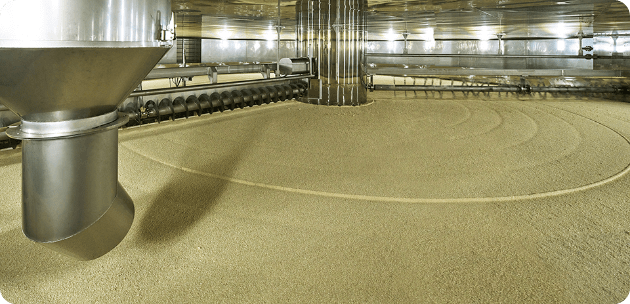
The rice is spread evenly within the 16-meter-diameter automatic disk koji-making system.
-
Cultivation
-
The koji is cultivated by maintaining the temperature and humidity while stirring it to ensure proper aeration.
-
Discharge
-
The finished rice koji is discharged from the koji-making chamber.
The essence of miso making is described by the phrase: “First koji, second cooking, third processing.” Foremost among these steps is rice koji making, which begins with sprinkling koji starter over steamed rice. The rice is then loaded into an automatic disk koji-making system, where it is carefully cultivated. The finished rice koji is then transported by screw conveyor to the processing stage.
Koji Starter
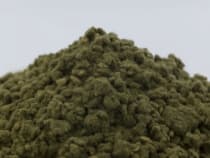
This is the starter culture (koji mold spores) used to make koji.
Rice
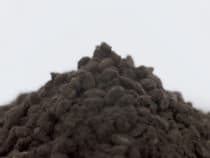
After rice has been polished to about 90% and steamed, koji starter is sprinkled over it.
Rice Koji
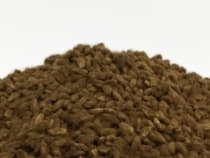
The koji is ready once the koji mold has grown and both the surface and inside of the rice have turned white.
Koji: A Master of Making Enzymes
As koji mold grows, it generates more than 30 different types of enzymes, three of which are especially important for making miso—amylase, protease and lipase. These enzymes break down starch, proteins and lipids, respectively, to create the sweetness, umami and rich aroma of miso.
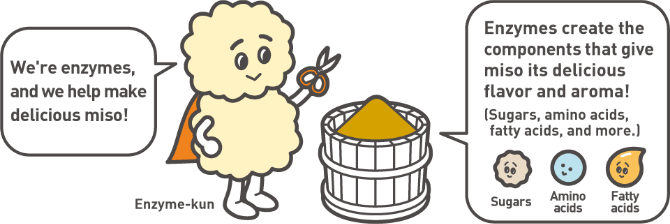
[ Amylase ]
An enzyme that breaks down starch.
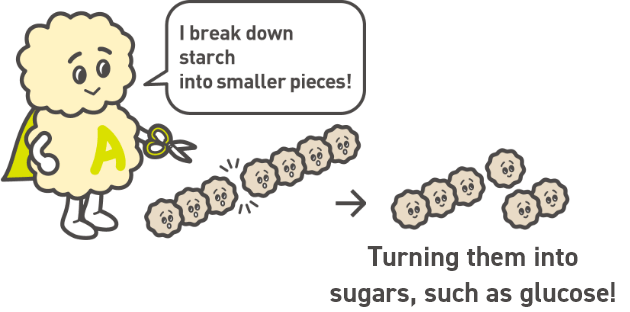
Creating sweetness and a mellow flavor!
[ Protease ]
An enzyme that breaks down proteins.
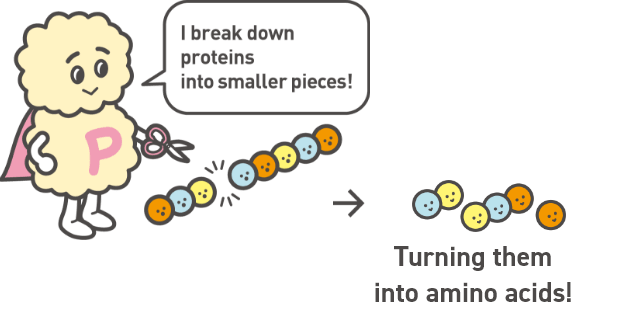
Creating umami and richness!
[ Lipase ]
An enzyme that breaks down fats.
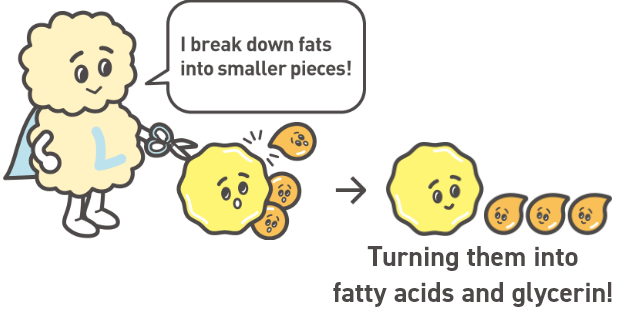
Creating a mellow flavor and aroma!
Koji: A Culinary Essential
Koji has long been a staple of Japanese food culture, playing a key role in the creation of many traditional seasonings and foods.
Miso, soy sauce, rice vinegar, mirin, amazake, sake, shochu, awamori—all of these are made possible by the power of koji mold.
In 2006, the Brewing Society of Japan recognized koji mold as “a valuable asset carefully nurtured and used by our ancestors,” designating it the “national fungus.”